Insights
One question per post, answered properly.
Deep dives on real money questions, plus a market review each quarter. Subscribe and each one lands in your inbox.
The library
Find a post.
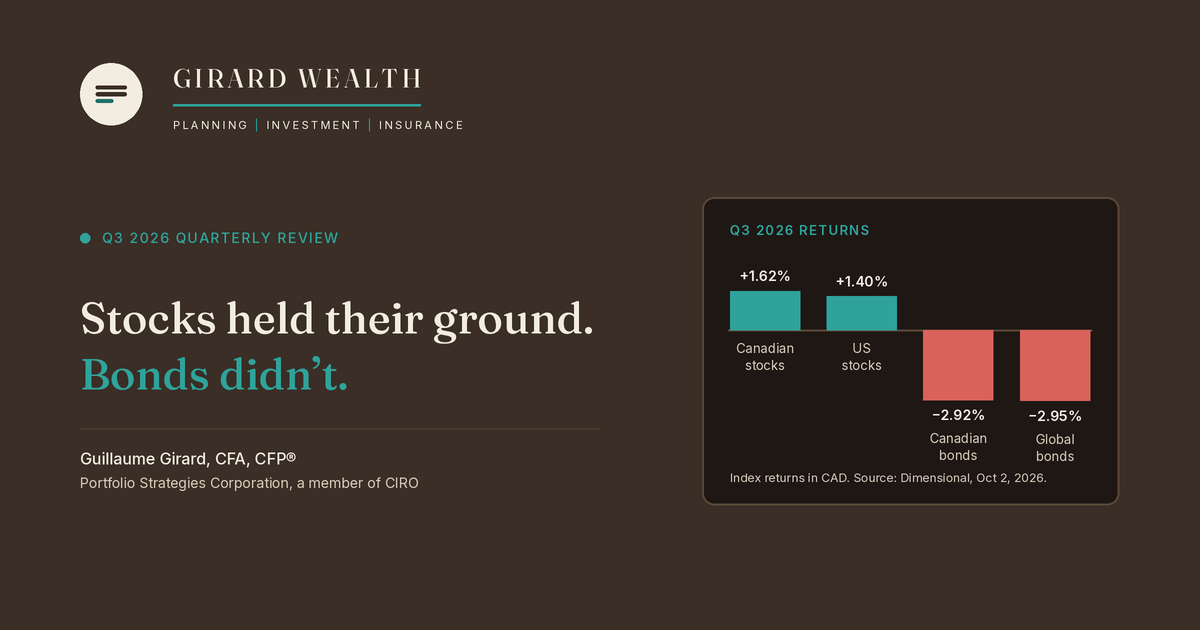
Q3 2026
Stocks held their ground. Bonds didn’t.
Stocks gained a little almost everywhere while Canadian and global bonds fell about 3%. Last quarter’s best markets reversed, the worst ones rose, and value swept every region again.
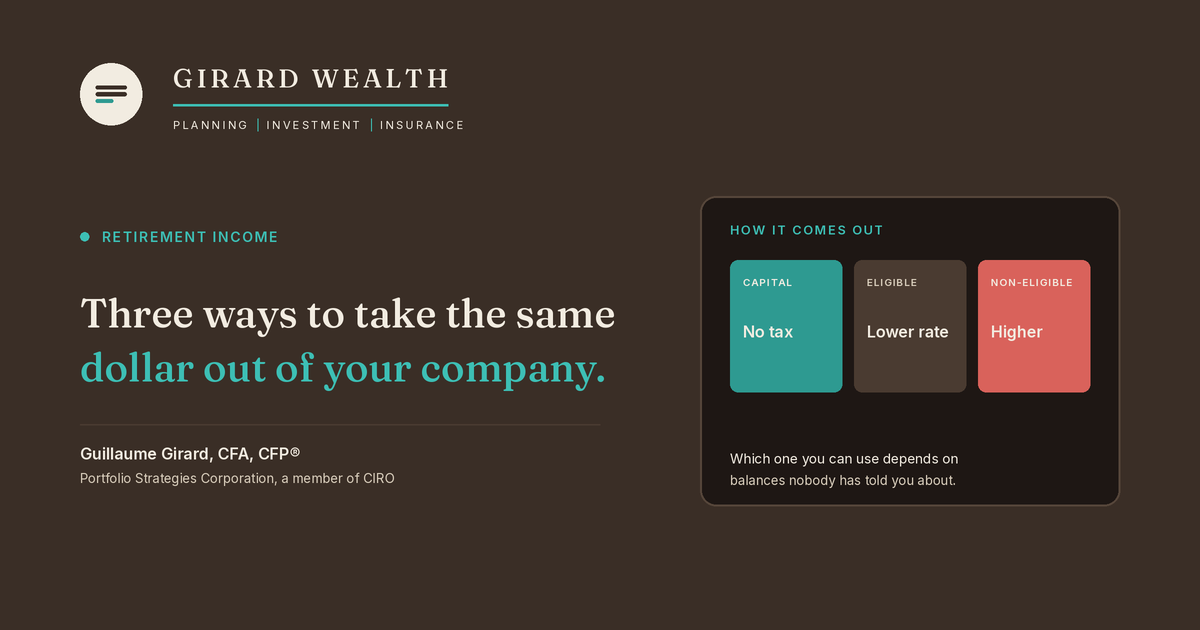
Retirement income
You kept the corporation. Now how do you draw from it?
A dollar out of your company can be taxed three completely different ways. Capital dividends, eligible and non-eligible dividends, the order worth using, and why the corporation is the most flexible source you have.
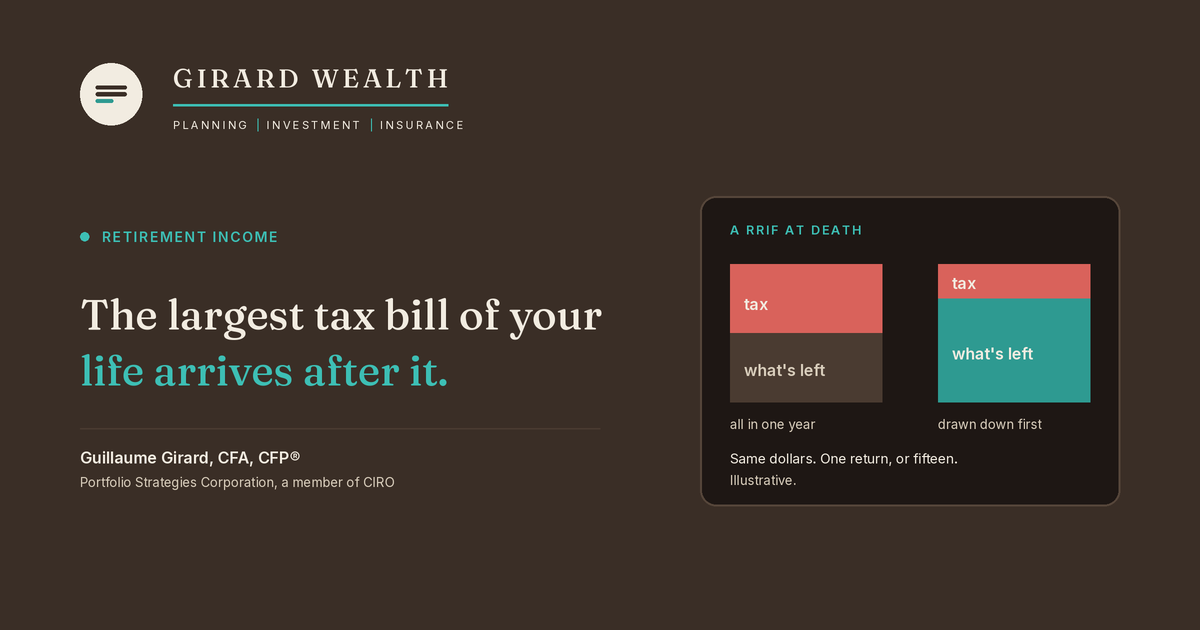
Retirement income
Tax at death: what happens to your RRIF and your estate
Whatever remains in a RRIF is generally brought into income all at once on the final return, where it can be taxed above 50%. What lands on that return, and what reduces it.
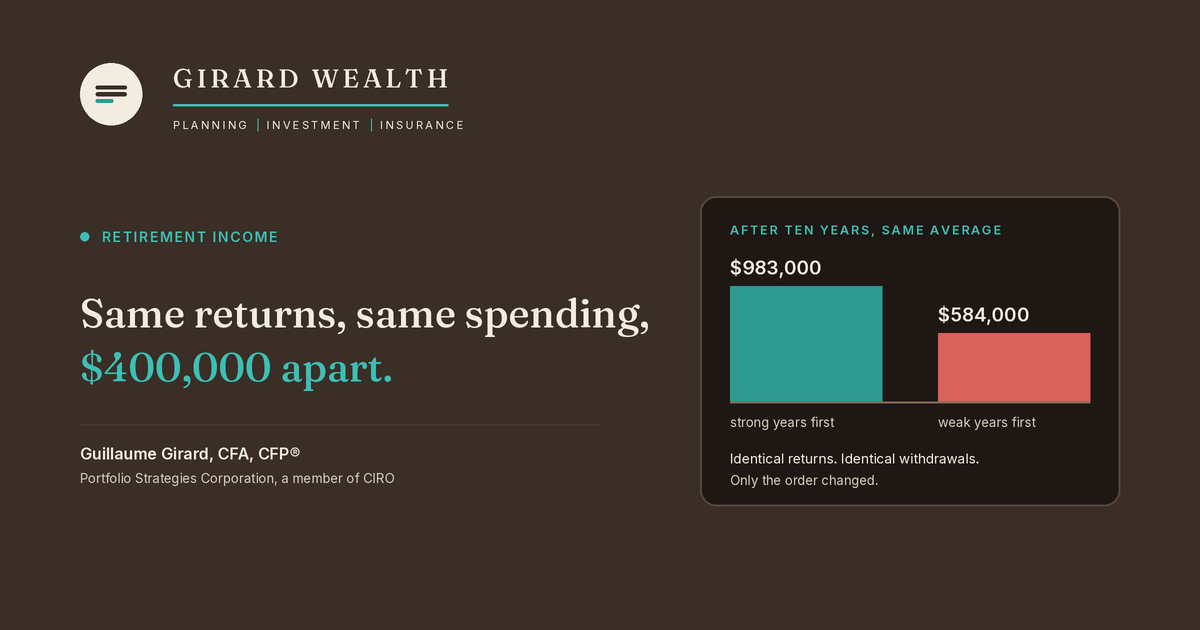
Retirement income
Sequence of returns risk: why the first years matter most
Two retirees with identical returns and identical spending can end up hundreds of thousands apart, purely because of the order the returns arrived in. What the risk is, and what actually protects against it.
Retirement income
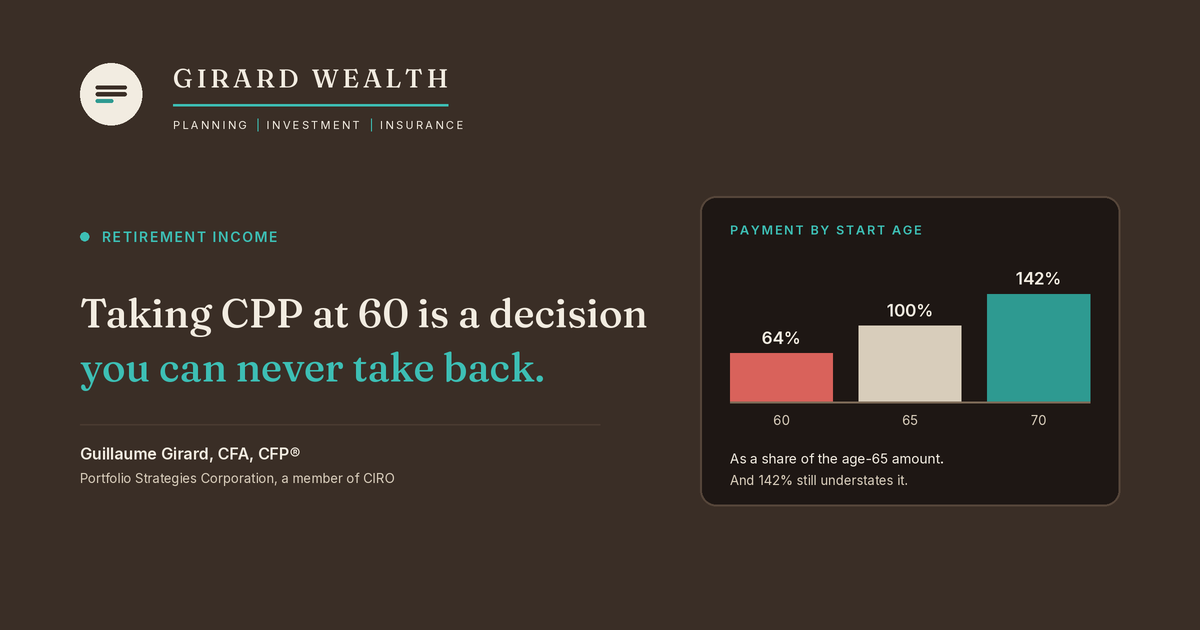
When to take CPP: 60, 65 or 70?
Taking CPP at 60 means 36% less for life. Waiting to 70 means 42% more, and more than that once wage indexation is counted. The arithmetic behind the decision, and how it connects to OAS and your tax bill.
Retirement income
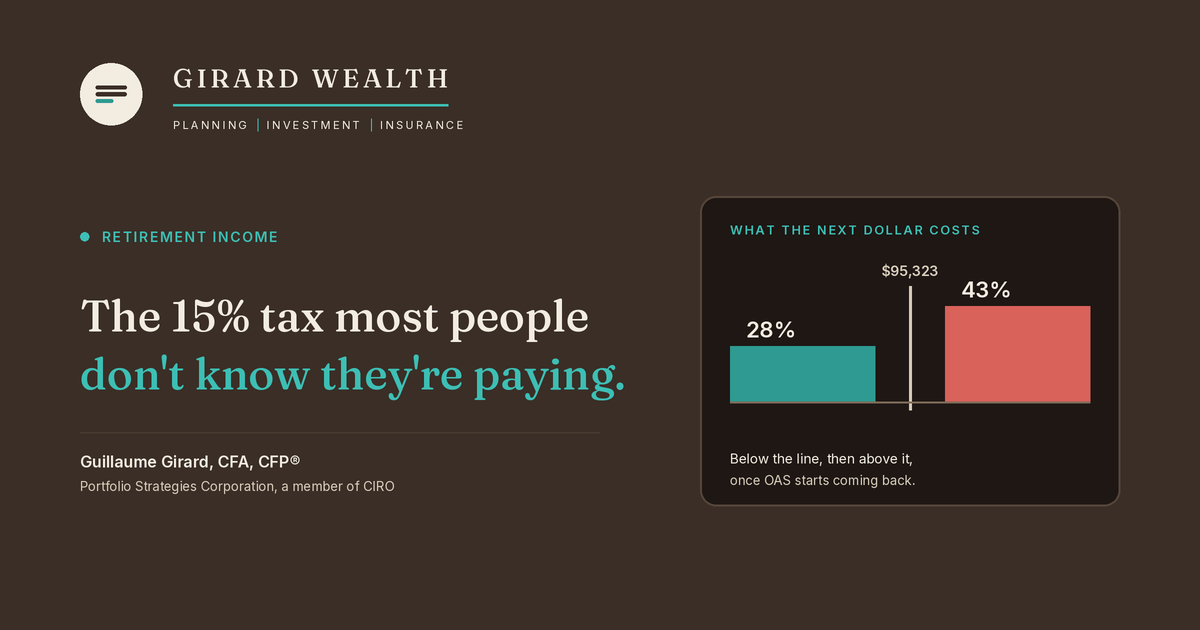
The 15% tax most people don’t know they’re paying.
The OAS recovery tax quietly claws back 15 cents of OAS for every dollar of net income over $95,323 in 2026. How it works, what pushes retirees over the line, and what actually reduces it.
Group retirement
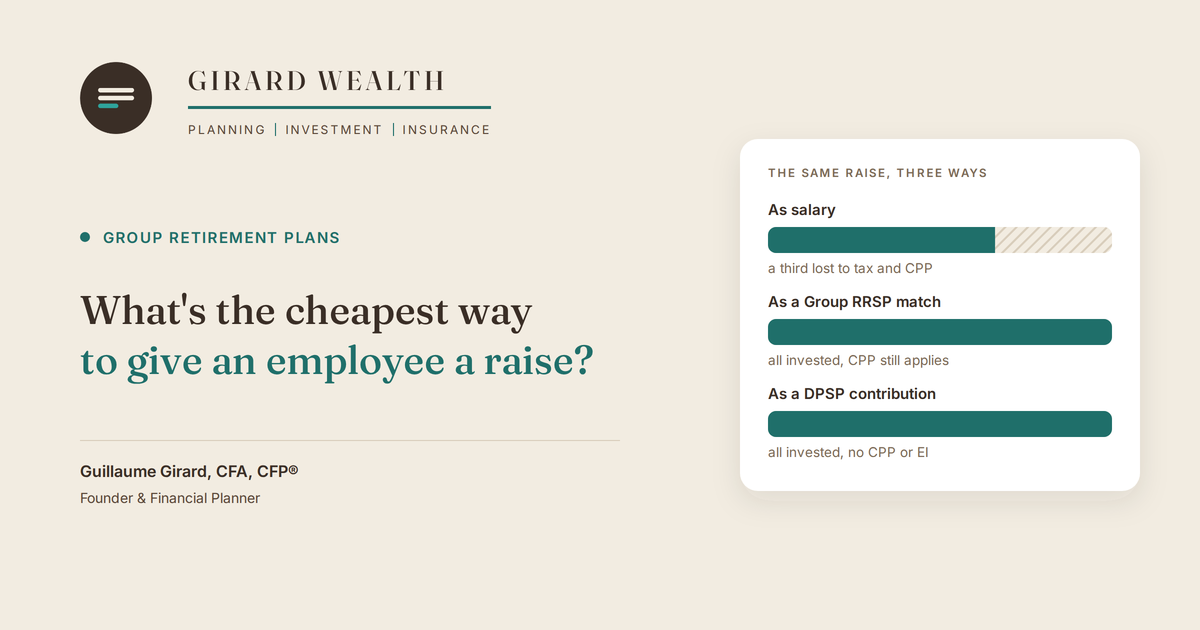
What’s the cheapest way to give an employee a raise?
The same $5,000 raise costs about $5,225 as salary and leaves the employee roughly $3,400. Through a DPSP it costs $5,000 and they keep all of it. A worked BC example with CPP, EI and tax.
Group retirement
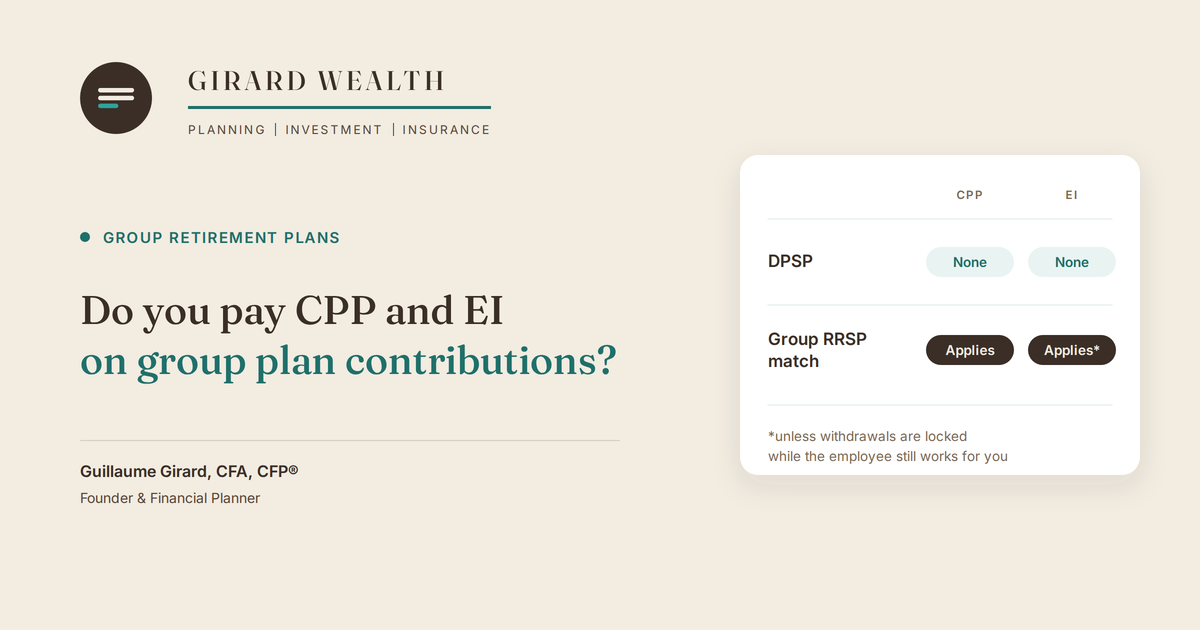
Do you pay CPP and EI on group plan contributions?
A DPSP contribution is exempt from both. A Group RRSP match always attracts CPP, and EI unless withdrawals are restricted. What the difference costs, with a worked example.
Group retirement
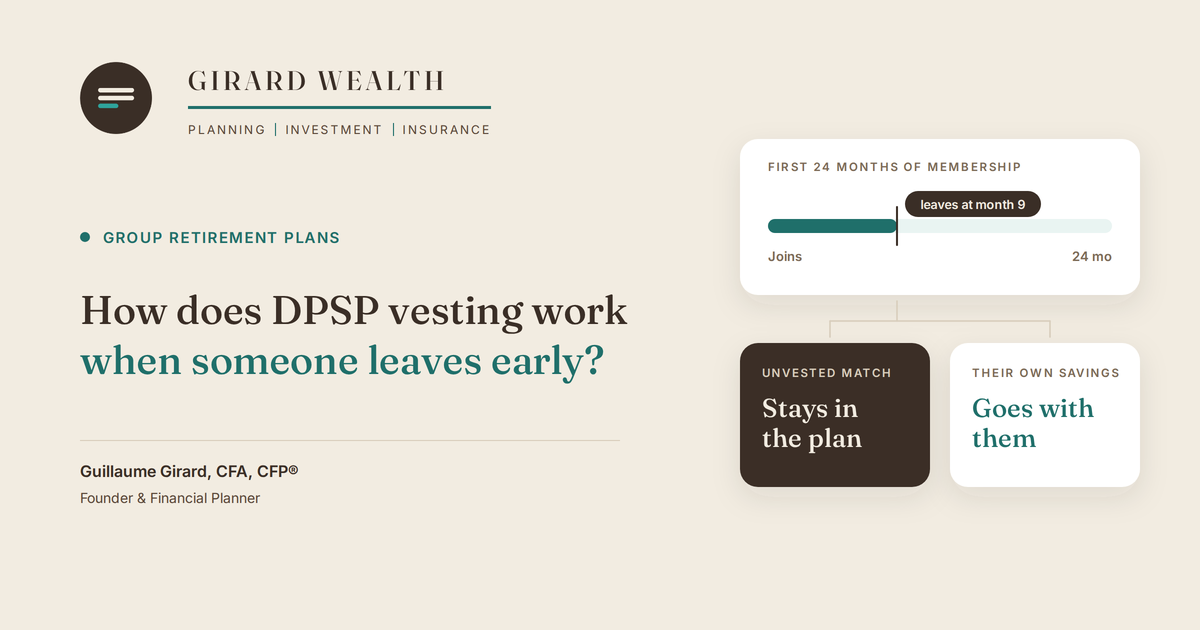
How does DPSP vesting work when someone leaves?
Vesting is the waiting period, up to 24 months, before your DPSP contributions belong to the employee. When the clock starts, what happens to unvested money, and where forfeited amounts go.
Group retirement
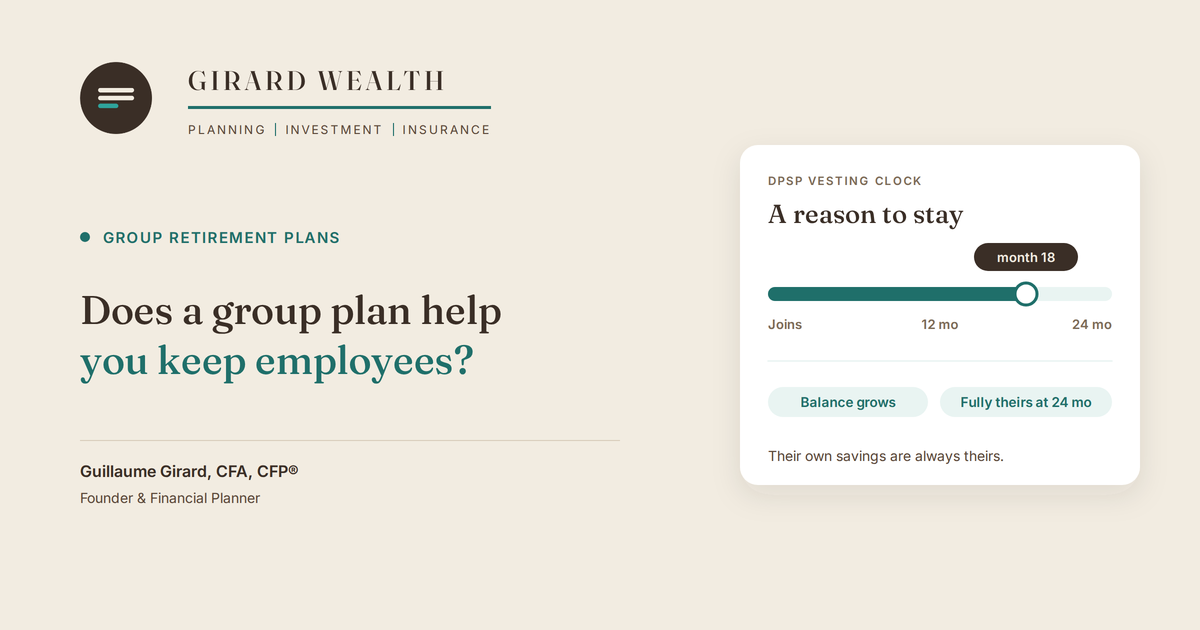
Does a group plan help you keep employees?
Research links workplace plans to longer tenure and lower turnover. How a DPSP vesting clock gives people a reason to stay, why it beats a noncompete, and the honest limits.
Group retirement
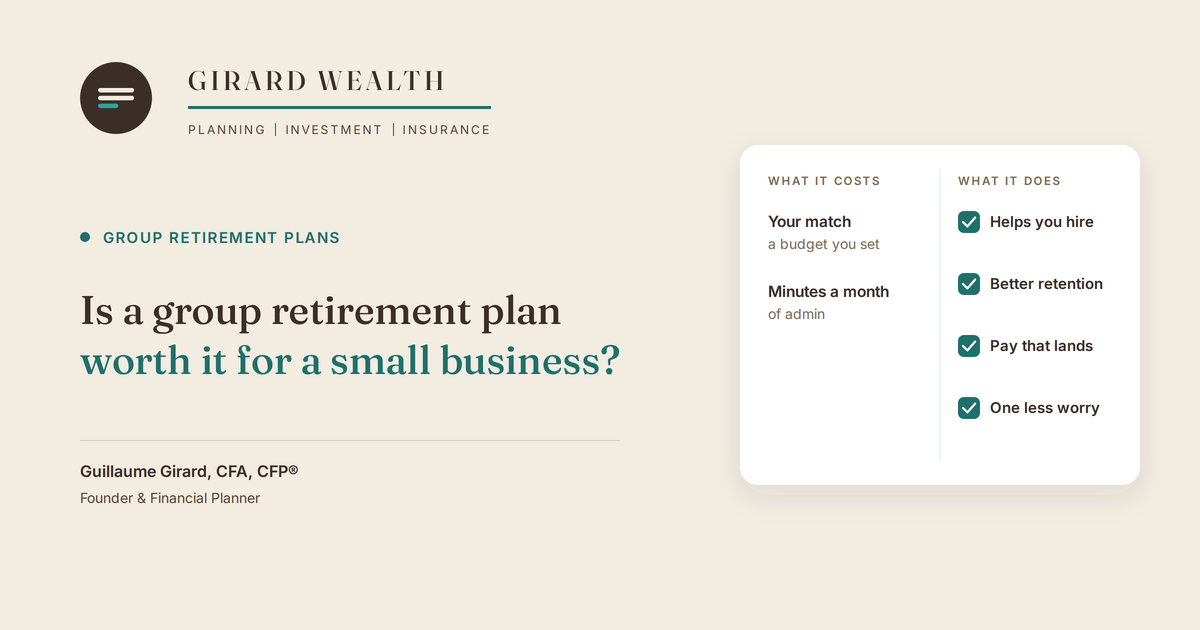
Is a group retirement plan worth it for a small business?
For most businesses with steady staff, yes. It helps you hire, keeps people longer, and delivers pay more efficiently than a raise. What the research says, and when a plan isn’t worth it.
Group retirement
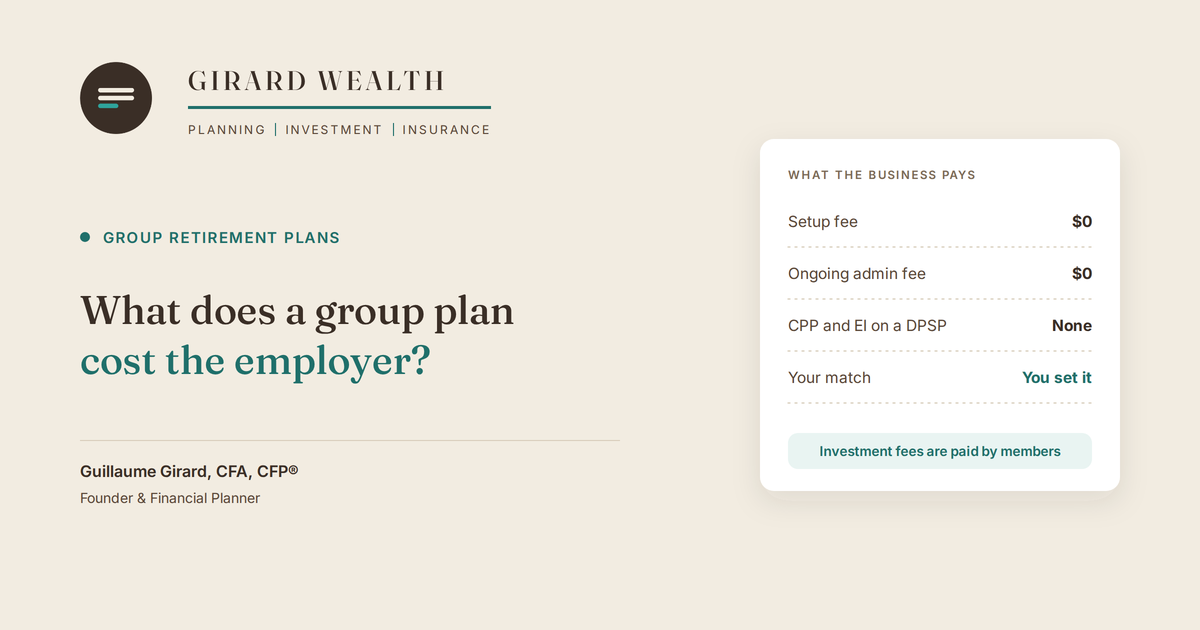
How much does a group retirement plan cost an employer?
Mostly, it costs what you choose to contribute. On modern platforms there’s typically no setup fee and no admin fee for the business. Every real cost, in order, with a worked example for a team of eight.
Group retirement
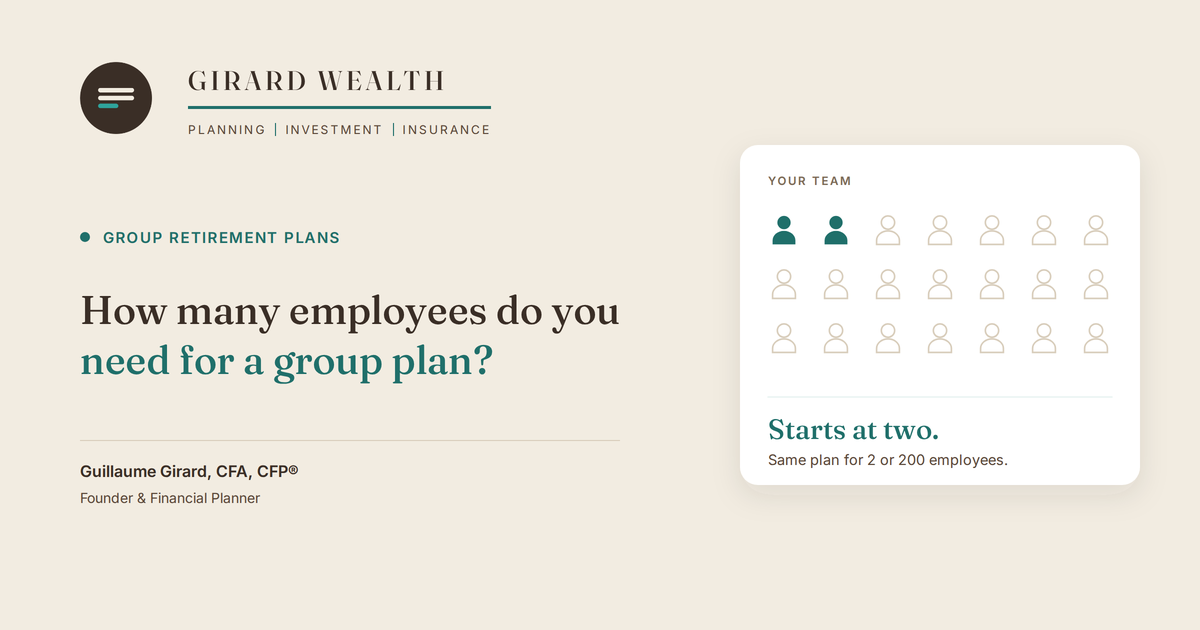
How many employees do you need for a group plan?
You don’t need 50 or 100 staff. The tax rules set no minimum; providers do, and modern plans start at two employees. What changed, what you get as the owner, and the Quebec rule to know.
Group retirement
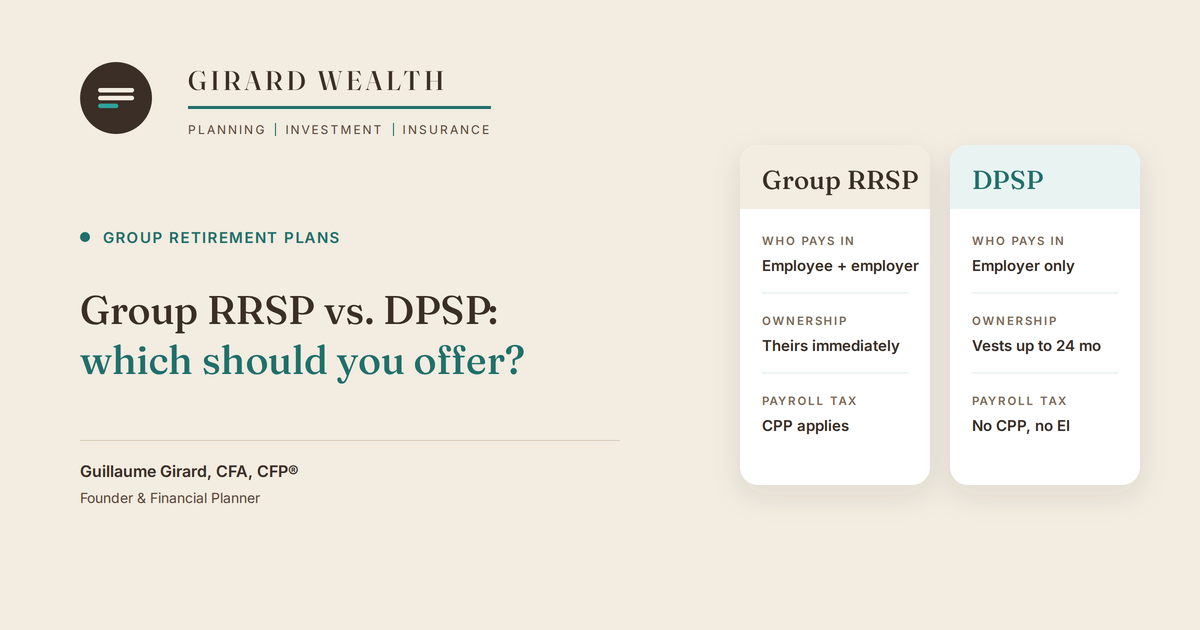
Group RRSP vs. DPSP: which should you offer?
Both are group retirement plans, but the money behaves very differently once it goes in. Who contributes, CPP and EI, vesting, the effect on RRSP room, owner eligibility, and why many small businesses use both together.
Group retirement
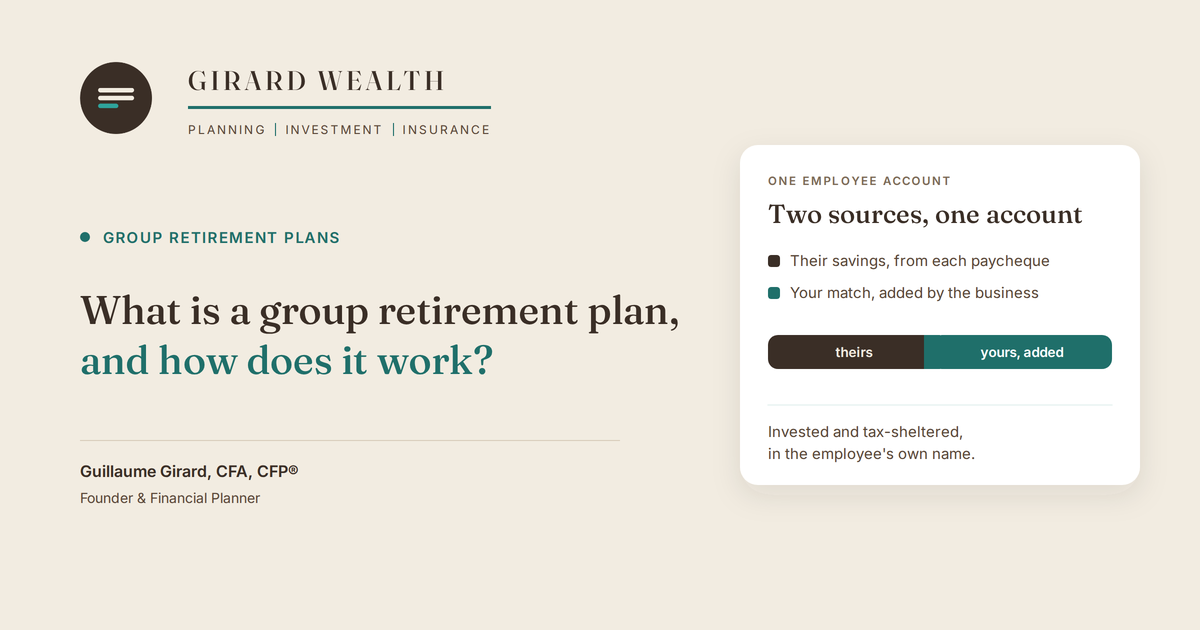
What is a group retirement plan, and how does it work?
The plain version first: a workplace savings plan your business sets up for its team. How Group RRSPs, DPSPs and Group TFSAs work, who pays what, how the money moves, and who it suits.
Business owners
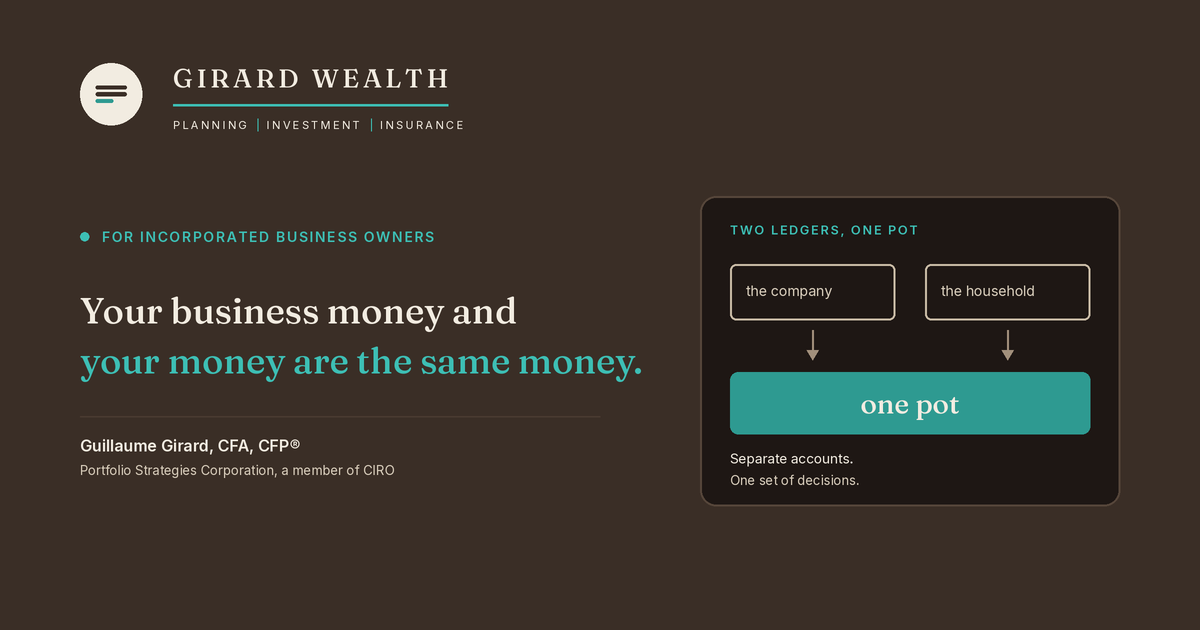
Your business money and your money are the same money.
Owners carry two ledgers in their head and make worse decisions because of it. How mental accounting shows up in corporate cash, how you pay yourself and insurance, and what changes when you look at it as one picture.
Business owners
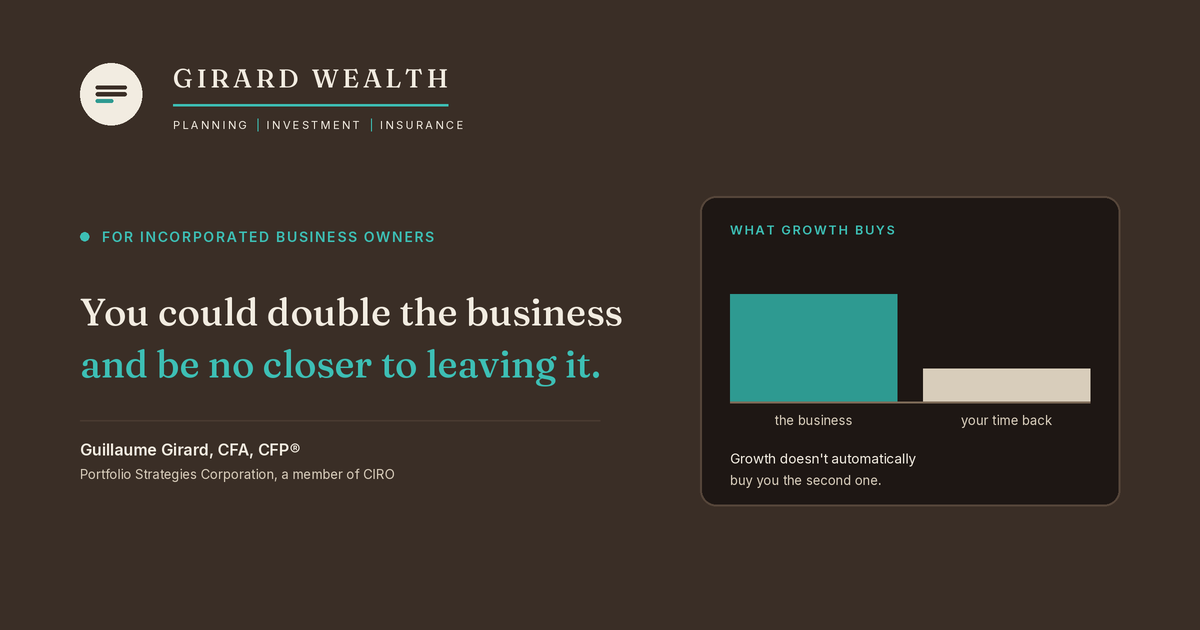
You could double the business and be no closer to leaving it.
Most growth plans get built without anyone asking what the growth is for. Why the business plan and the personal plan have to be built against each other, and what happens when they aren’t.
Financial planning
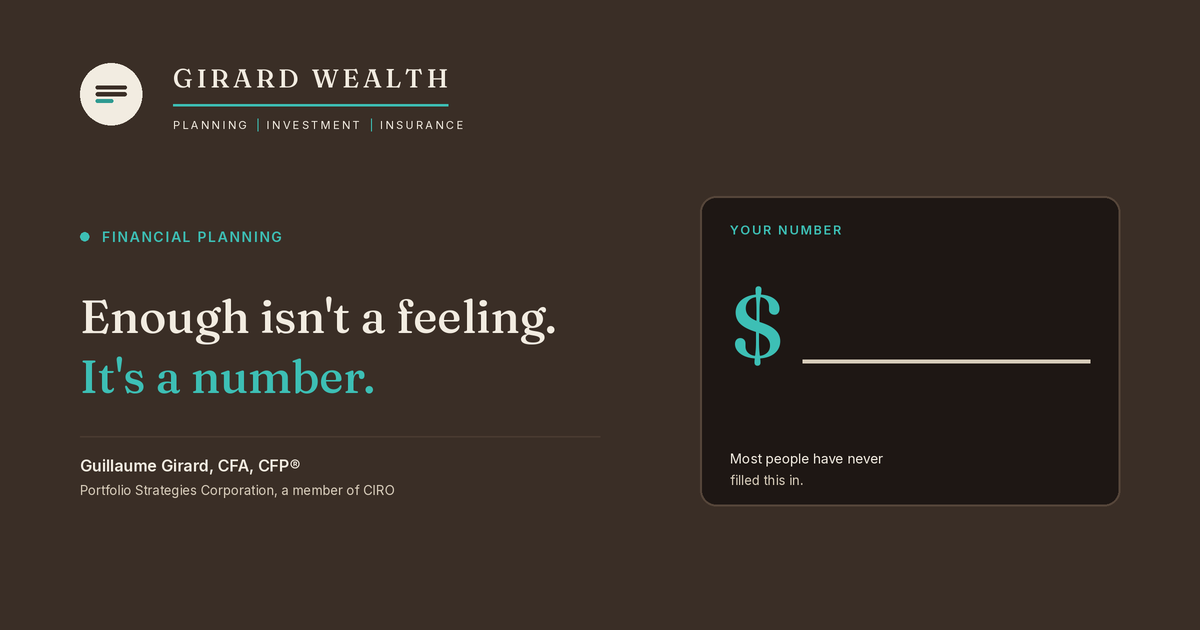
You could already have enough. Nothing would tell you.
Most people are working toward a number nobody has calculated. How to define ‘enough’ in figures rather than as a feeling, and what changes once you know what you actually need.
Business owners
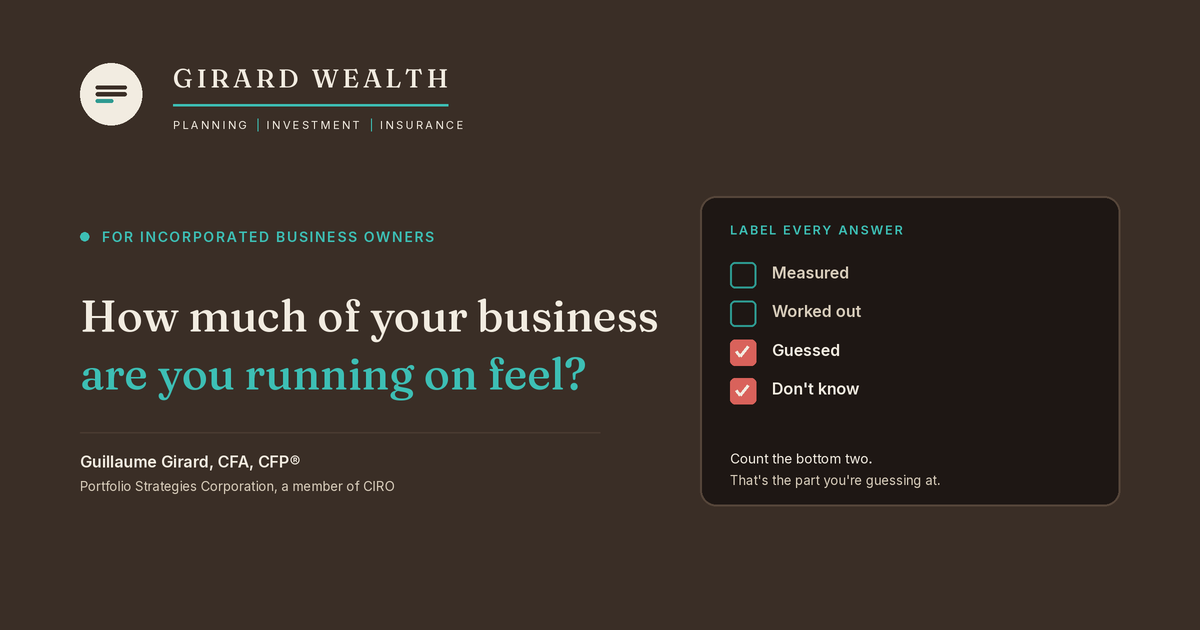
How much of your business are you running on feel?
Where did last year’s clients come from, do they stay, and what is one worth? Six things every incorporated owner should be able to describe, and a ten-minute exercise to find the gaps.
Retirement income
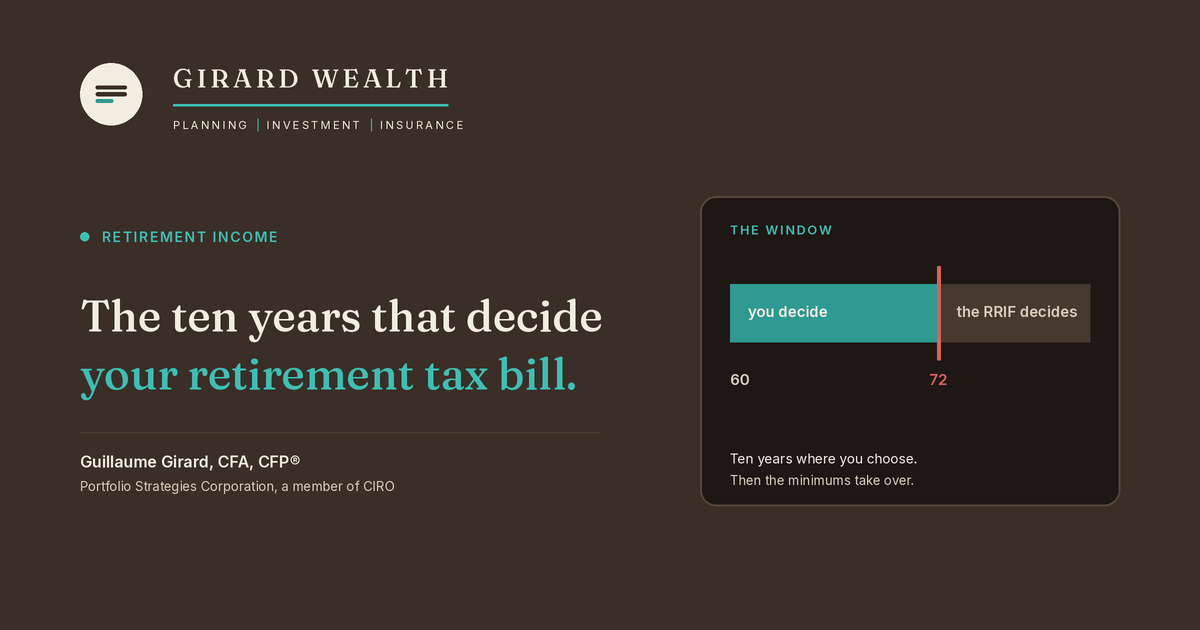
The ten years that decide your retirement tax bill
A ten-year window opens when your paycheque stops and shuts when RRIF minimums begin at 72. How you draw down registered accounts in your sixties can change your estate by hundreds of thousands.
Bond markets
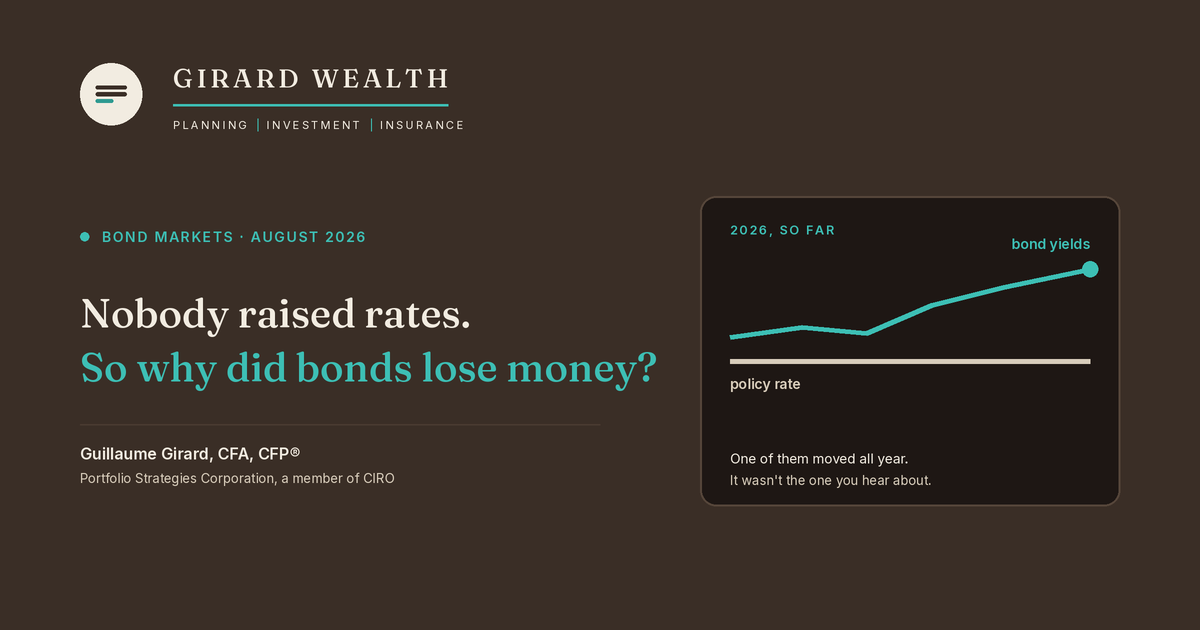
Nobody raised rates. So why did bonds lose money?
Central banks held rates steady, yet bonds fell. Why market yields rose on their own, what bonds are actually for, and why swapping them for “alternatives” is usually the wrong move.
Business owners
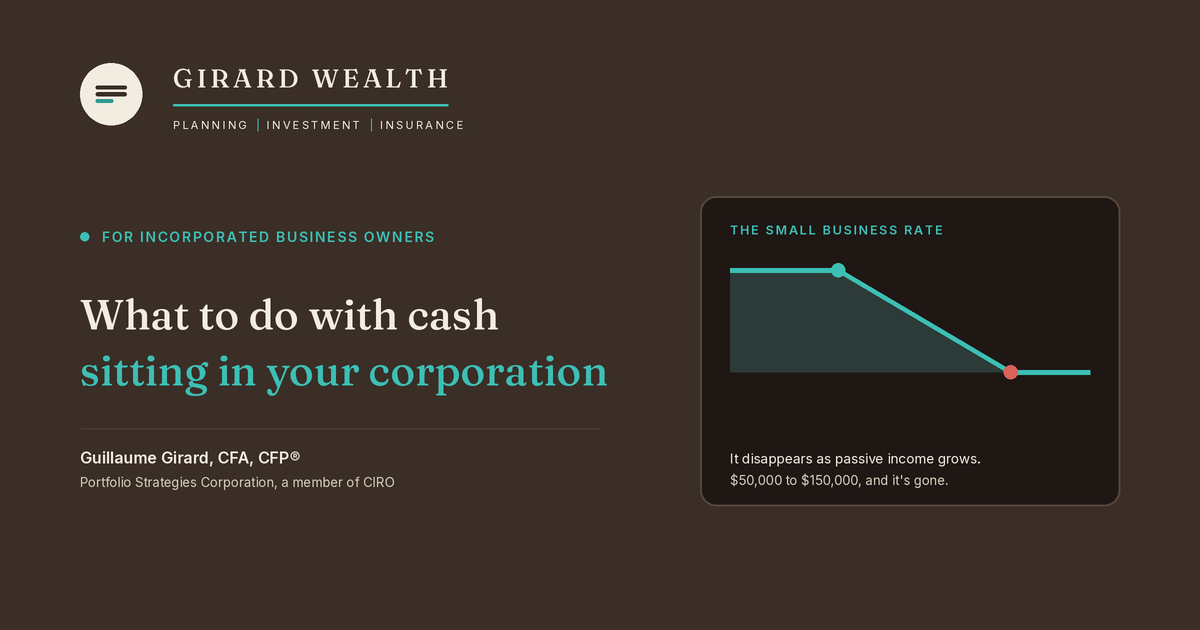
What to do with cash sitting in your corporation
A dollar left in the company buys almost twice the investing power, until investment income crosses $50,000 and the small business rate starts to vanish. A framework, and where to start.
Q2 2026
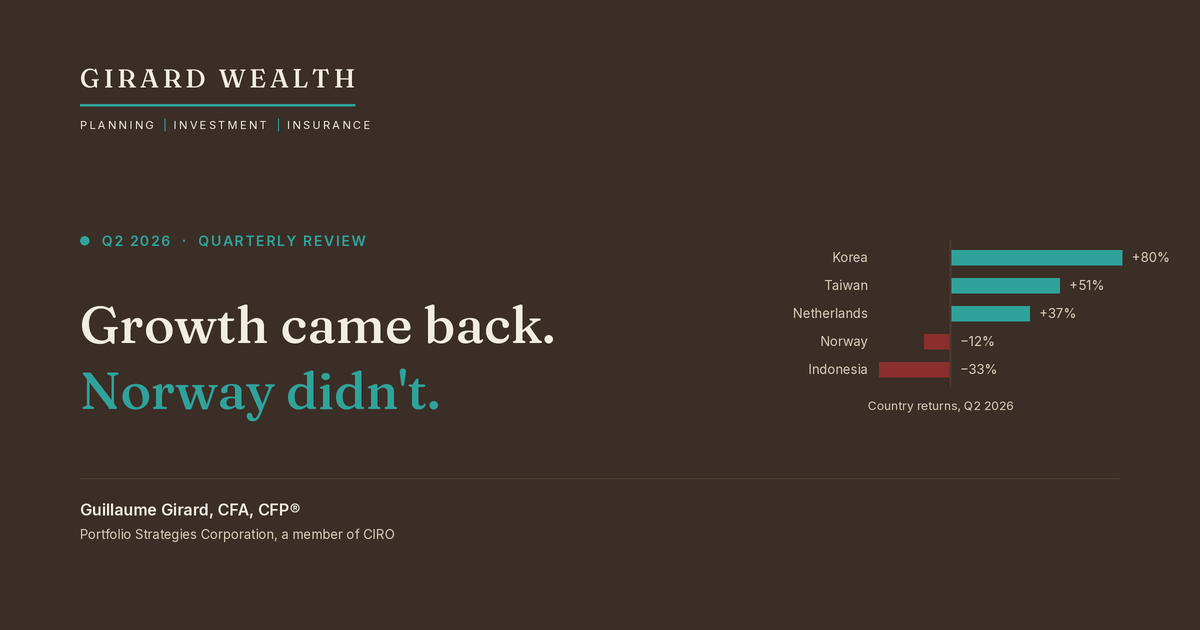
Growth came back. Norway didn’t.
Growth reclaimed the lead, Norway gave back its Q1 top spot, and every diversified portfolio still had a strong three months. The quarter, and what it means.
Q1 2026
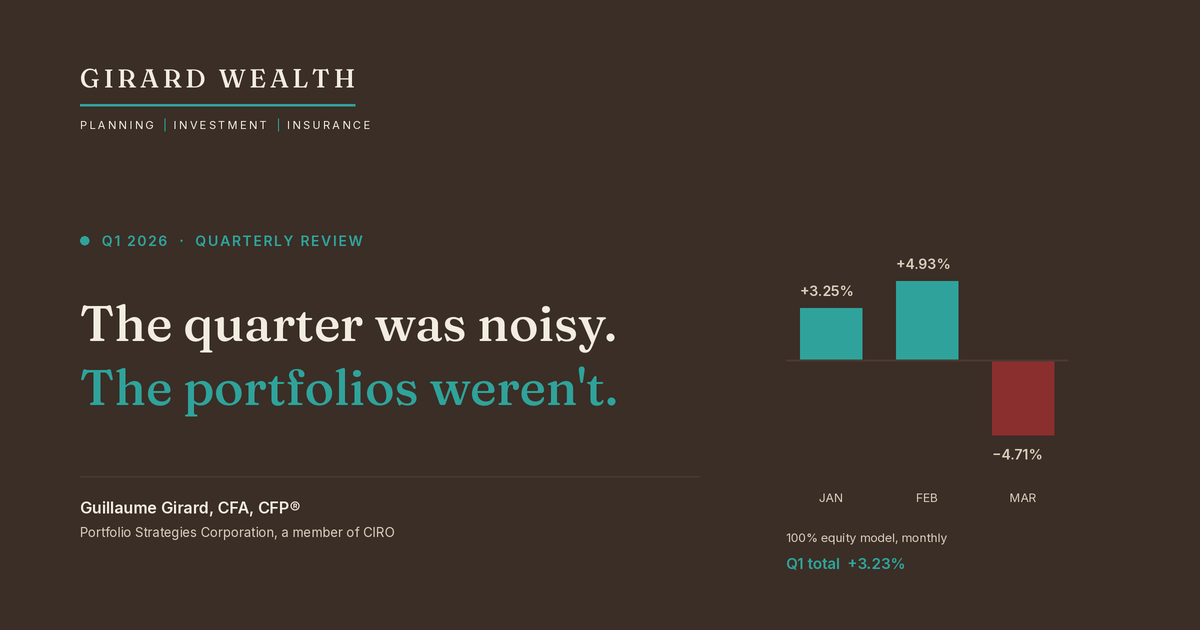
The quarter was noisy. The portfolios weren’t.
Oil at $100, growth stocks crushed, headlines everywhere, and every diversified portfolio still finished positive. Value beat growth in every region, and Norway led the world.
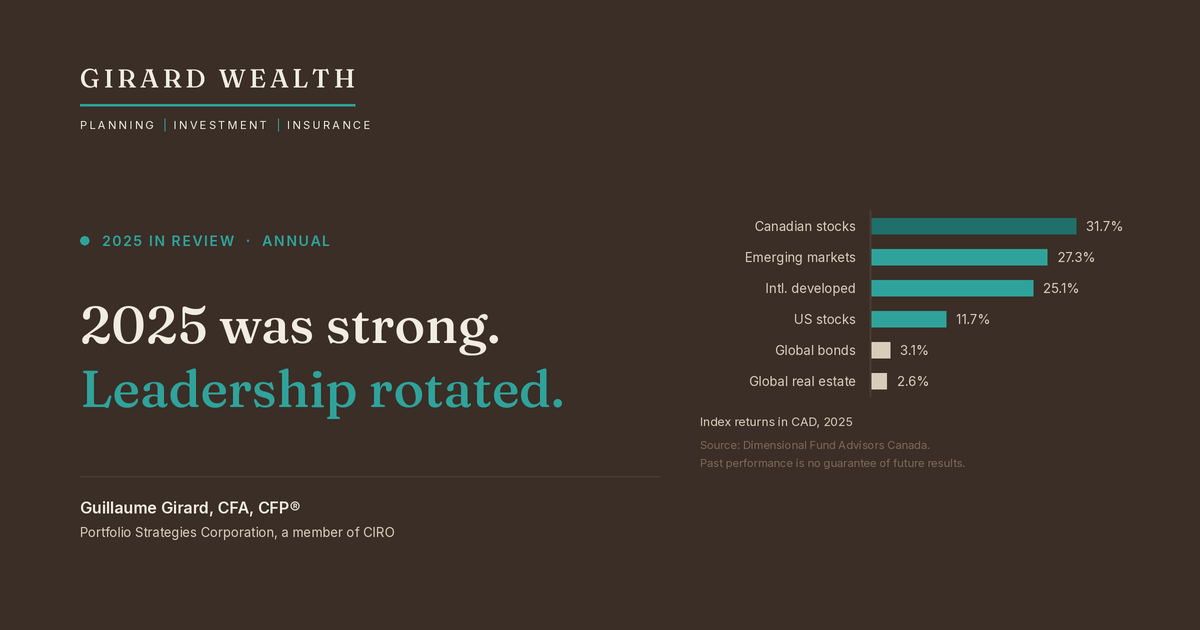
2025 year-end
2025 was strong. Leadership rotated.
The full year in plain English: Canadian, international and emerging stocks led, the US lagged, factors rotated, and a look at the valuation setup heading into 2026.
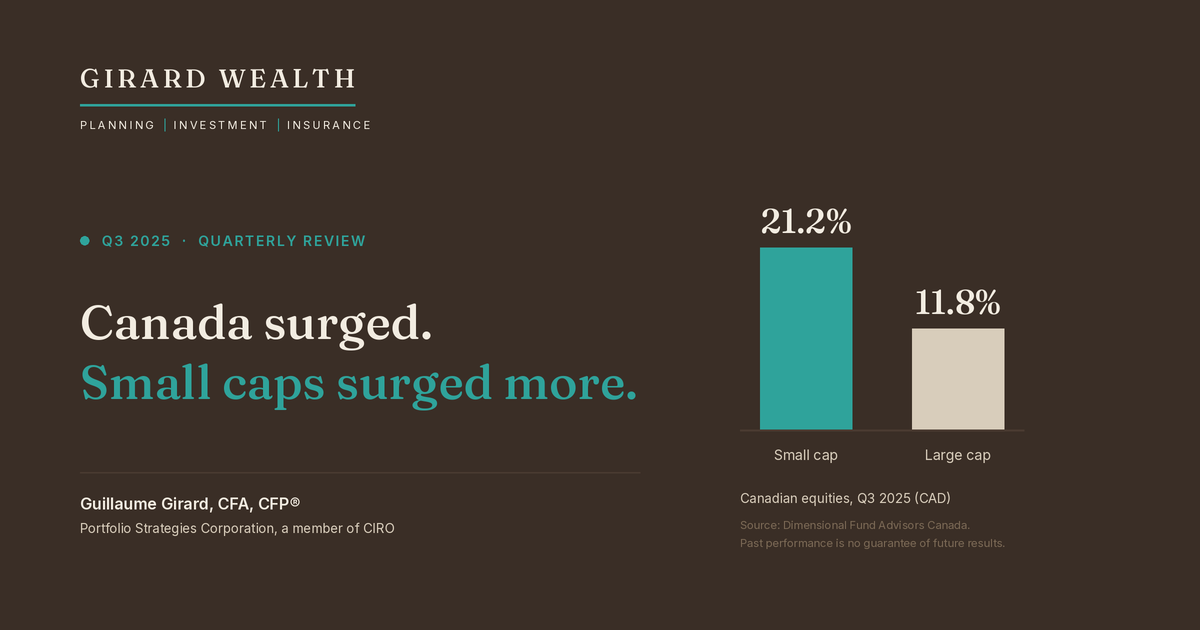
Q3 2025
Canada surged. Small caps surged more.
Equities rebounded everywhere, Canada and small caps led at home, and history has something to say about fourth quarters. The quarter in plain English.
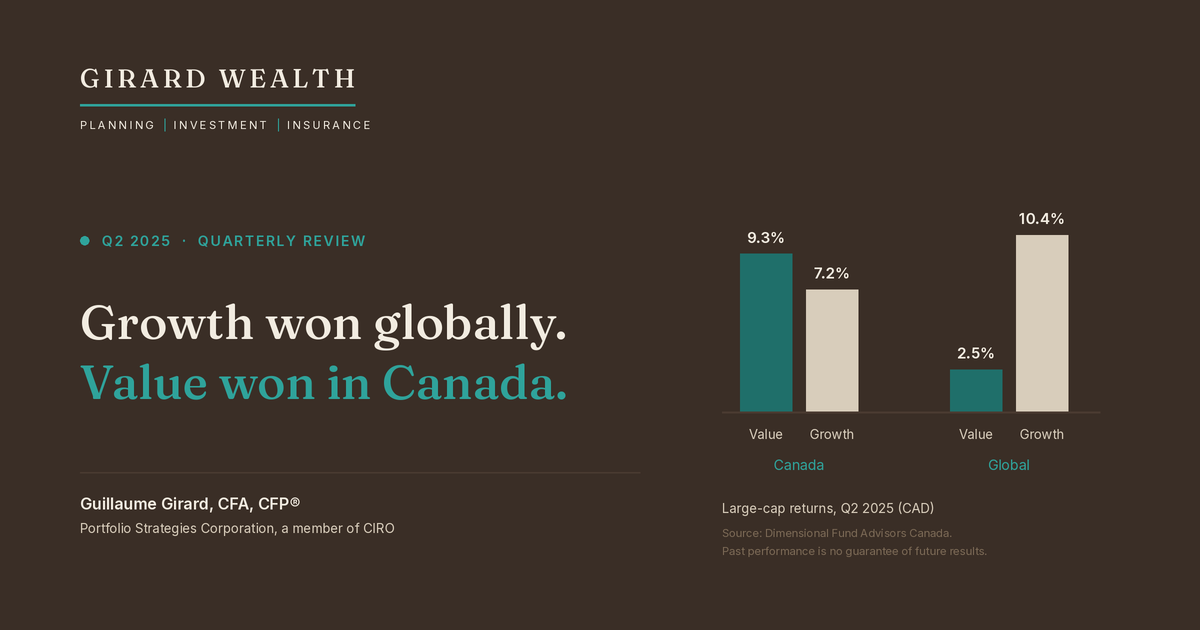
Q2 2025
Growth won globally. Value won in Canada.
A quarter of wide dispersion: growth led the world while value won at home, and a look at how long bull markets historically last.
No posts match. Try a different word or clear the filters.
In the media
Featured in The Globe and Mail.
The Globe and Mail · June 2024
In year two of the FHSA, how and where should Canadians invest?
Guillaume Girard on how to invest a First Home Savings Account by time horizon, from conservative holdings close to a purchase to a growth tilt for buyers who are still a few years out.
Read on The Globe and MailThe Globe and Mail · May 2024
How wealth management firms are expanding their offerings through money coaching
A profile of Guillaume Girard’s investment-coaching approach, exploring the experiences and beliefs behind a client’s money decisions, not just the numbers.
Read on The Globe and MailSubscribe to our Newsletter
What most people miss with their money.
I write about financial decisions, trade-offs, and what business owners and retirees tend to overlook.
One-click unsubscribe, always. I never share your address.